
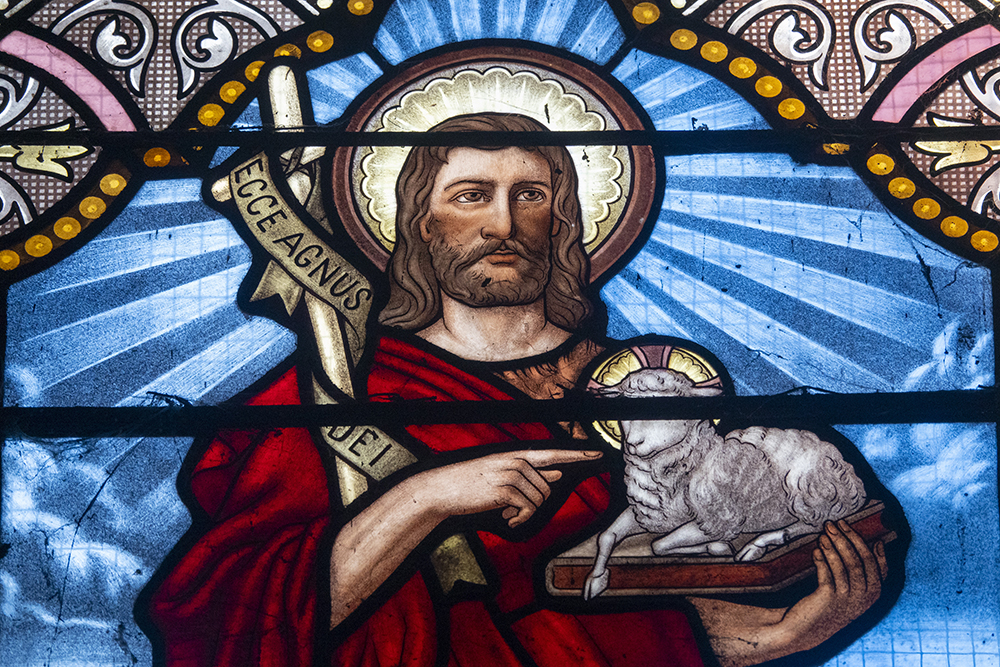
Today is Good Shepherd Sunday. In the Gospel, we hear the iconic parable of Jesus explaining that He is the gate of the sheepfold, and the good shepherd. He warns about the thieves and robbers that came before him, but ultimately gives us a message of hope for those who hear his voice.
The last few lines of the Gospel are: Jesus said again, “Amen, amen, I say to you, I am the gate for the sheep. All who came before me are thieves and robbers, but the sheep did not listen to them. I am the gate. Whoever enters through me will be saved, and will come in and go out and find pasture. A thief comes only to steal and slaughter and destroy; I came so that they might have life and have it more abundantly.”
Jesus directed His words to the Pharisees, but they did not understand His parable. This is because when Jesus is talking about thieves and robbers, He is talking about the corrupt religious leaders and their predecessors. Because religious leaders had a place of authority in ancient Jewish society, it was not uncommon for the leaders to fall into the temptation of abusing their influence. They would lay heavy burdens on the people in the form of tithes and taxes. They would have the people honor them because of their outwardly pious actions. And they would care about useless details of the Law rather than being concerned about mercy and justice. But because of their pride, they could not understand Jesus’ words. They were blind.
In this critique, Jesus draws out a pitfall of Judaism. Because they had a complex system of Law, you could become an expert of the Law and follow it by the letter, but completely miss the spirit of the Law. For example, if the Law is “You shall not kill”, someone may be convinced that they have followed the Law because they have not physically murdered anyone. However, as Jesus points out on the Sermon on the Mount, if you have hatred for someone and wish or act as if they are nonexistent, then you have done a similar thing, if not the same thing as murder. Unfortunately, a strict follower of the Law could convince themselves that they are righteous, even though they hold grave sin in their heart.
This pitfall is not unique to Judaism. It can be found in any institution that has rules. Because Christianity is so closely linked to Judaism, ‘pharisaism’ or ‘legalism’ can be found among many pious Catholics. In this mode of thinking, God’s love gets warped in our hearts. Instead of taking him at his Word and His Spirit, we decide to conform God’s will to our own. We become hypocritical and have the ability to use the warped Word of God as a tool for manipulation and personal glorification. Consequently, when the true Word and Spirit of God come while our hearts are in this state, we have the instinct to rebel against God. This rebellion of pride could drive us to the point of persecuting or eliminating God’s true Word just like some Jewish religious leaders did for centuries to the prophets and ultimately Jesus.
So as we celebrate this Easter season, we must ask ourselves if we have fallen into the same pitfall that has plagued members of both Judaism and Catholicism. Do we act as a thief who uses God’s Word to steal, slaughter, and destroy through manipulation and hypocrisy? Or do we humbly follow the Good Shepherd because we hear His voice and follow it because we trust that He is leading us to green pastures where we might have life abundantly?