
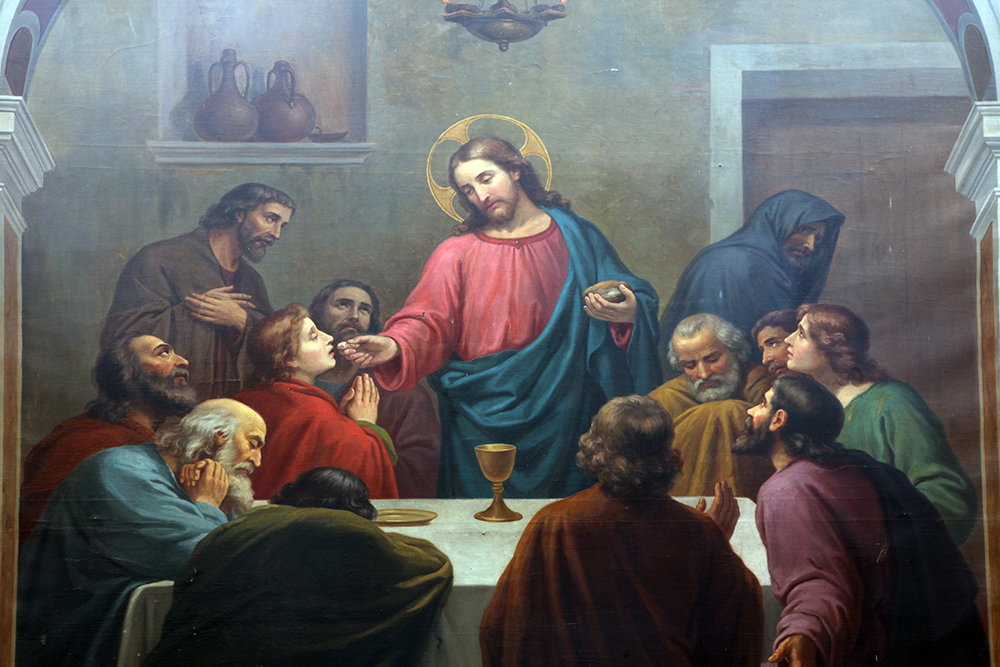
In recent years, the Eucharist has been a hot button topic of discussion within Catholic evangelization circles. When it was revealed that not even a third of Catholics believed in the true presence of Jesus in the Eucharist, those who did believe were so shaken that it inspired action in the form of the Eucharistic Revival. Doctrinal education about the Eucharist has swept the nation from the pulpit and in formation settings. Priests and teachers have worked to right the poor catechesis that had been taking place for nearly half a century, and they have done so with mild success. But more importantly and effectively, practical encounters with Jesus in the Eucharist have been made available to the masses. And as a result, we already see the Eucharistic revival in America beginning to bear fruit.
Why have the practical encounters with Jesus in the Eucharist been so powerful? Because the Eucharist is meant to be received, not just studied. The Eucharist is a person, and people are meant to be experienced. When we want to receive the fullness of a person, we form a relationship with them. This means that we will spend time with them. We give ourselves to them spiritually, emotionally, and physically, and they reciprocate. The results can vary, but if both of the individuals are invested in the good of the other, the relationship will ultimately become an enjoyable experience for both individuals.
Jesus is God, and because of our sinful nature, we cannot fully stand in God’s presence without fleeing. The Israelites were scared to literal death right before Moses received the ten commandments when God invited them to draw near Him. So the genius of God is that He hides himself in the form of a human person, Jesus of Nazareth and approaches us in our weakness because we refused to approach him. In becoming man, God was able to bring His physical healing power to His people to restore us as His sons and daughters.
However, Jesus was still limited by his human form. He could not be physically present to all people in all time periods. So He left us His physical presence in two elements that can be accessed in nearly every climate all over the world, bread and wine. By giving us the Eucharist, Jesus made sure that His saving power could be physically encountered anywhere His believers were present.
In this action, God also continues to reveal the depth of His humility. Even though he wanted us to accept Him so much that He became a man, we still did not accept that man. We killed Him. Knowing this would happen, on the night before He died, God descends even lower by giving us his presence in food that we consume. He becomes lower than us in order to raise us up to Him. In this way, Jesus contradicts the Gentiles, who lord themselves over others. Rather, Jesus empties Himself, coming in the form of a slave, and then gives us Himself to eat and drink for the remission of our sins. He allows Himself to be used and abused for our salvation.
Why does Jesus do this? Because physical presence changes us. It is basic psychology that we absorb traits from the five people that we spend the most time with. In our internet age, social media and streaming services also contribute to our picked up behaviors. What we expose ourselves to matters, especially in the long term. Jesus gives us the opportunity to receive Him, and be in His presence continuously throughout our lives in the form of bread and wine so that we can not only pick up traits from Him, but be one with Him.
As our country continues with its Eucharistic revival, we must remember that the very purpose of God humbly giving us His presence is love, and that our recapturing of a devotion of the Eucharist is really a commitment to learning how to love like God. This is why God made us, and the more people that understand the love of the Eucharist, the more that God’s love will redeem the world. The burden and joy for all Catholics everywhere is to encounter this love and share it with all they meet so that our Church will truly undergo revival.