Jesus gave us the ability to find healing in our relationship with God and others through the sacrament of Reconciliation. By seeking forgiveness from those we have hurt and in the confessional, we can receive supernatural healing through the graces afforded to us by Jesus’ saving action. Consequently, those who avail themselves to the graces of forgiveness can find peace in their souls.
Yet, our sin also has physical effects. The whole of humanity’s sin has brought suffering and death into the world. As a result, each of us has to endure the consequences of a sinful world in our bodily deterioration over time. In His wisdom, God grants us the graces to endure these physical trials and possibly even receive physical healing through the sacrament of Anointing of the Sick.
When He came into our brokenness, Jesus taught about love, repentance, and forgiveness. As proof of His authority and as a demonstration of His compassion, Jesus also cured the sick, opened the eyes of the blind, and even raised the dead. Through the will of His Heavenly Father, Jesus healed those who had faith in Him. The early Church continued this tradition. Peter and John heal a man who could not walk on the steps of the temple after Jesus’ death and others believed they could be healed by just being in Peter’s shadow. The physical healing ministry of the Church has continued over the centuries and still has a place in the Church today.
Yet, not every person with an ailment who has come across Jesus and His Church has been healed. Through the mysterious will of God, some are not given the graces of physical healing. Rather, they are given spiritual graces to endure in their ailments and live a life of love in spite of them. In this way, they reflect the healing love of Jesus exemplified for us on the cross.
The early Church knew this tradition as well. St. James teaches, Are any among you sick? They should call for the elders of the church and have them pray over them, anointing them with oil in the name of the Lord. The prayer of faith will save the sick, and the Lord will raise them up; and anyone who has committed sins will be forgiven. In this instruction, we have the formula of the sacrament of Anointing of the Sick. It is clear that St. James recognizes that not all anointings end in physical healing, but if received in faith, they will aid in saving the members of the faithful from eternal death. To this day, the Anointing of the Sick is how the Church approaches all forms of maladies that plague its people. By giving the anointing, the Church allows God to work however He chooses in the life of the recipient, whether it be physical or spiritual aid (or both).
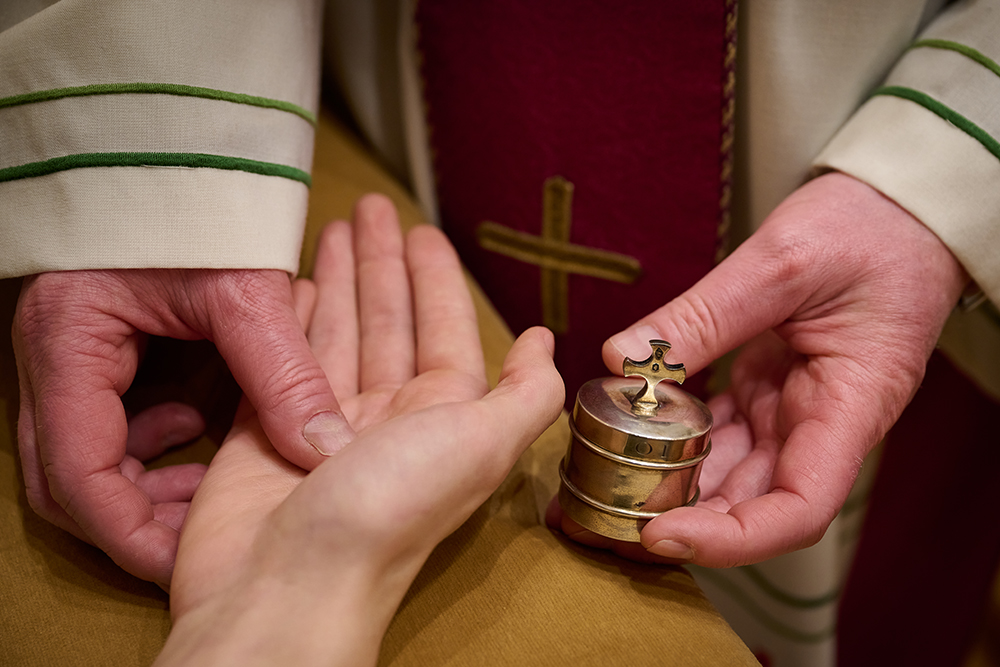
For Anointing of the Sick to take place, the matter of the sacrament is the Oil of the Sick that is consecrated during the Chrism Mass typically held on Holy Thursday. In the Latin church, the oil is to be placed on the forehead and hands of the recipient. In cases of emergency, any vegetable based oil can be used. The form is the words, “Through this anointing, by his most loving mercy, may the Lord assist you by the grace of the Holy Spirit so that freed from your sins he may save you and raise you up.” These words are said while the anointing takes place.
The minister of Anointing of the Sick is an ordained priest or bishop. This is because traditionally, the Anointing of the Sick is accompanied by the sacrament of Reconciliation and reception of the Eucharist. If these sacraments are received right before death, they are known as Last Rites, and the Eucharist is considered the Viaticum or “food for the journey” into eternal life. An apostoic pardon is also granted to those whose death is imminent. For those who receive the sacrament for non life-threatening ailments such as a minor surgery or loss of strength due to old age, the sacrament provides grace to endure in a Christlike manner.
The beauty of both of the sacraments of healing (Reconciliation and the Anointing of the Sick) is that God is using them to aid us on our journey to everlasting life where we will no longer have to endure the physical or spiritual ailments that plague us in this life. Yet for now, we need their help if we are to live as Jesus did. And in a world that does not value a life that has pain or old age, the sacrament of Anointing of the Sick is an extremely important gift that helps us to live life well from the beginning of life to our natural death.