
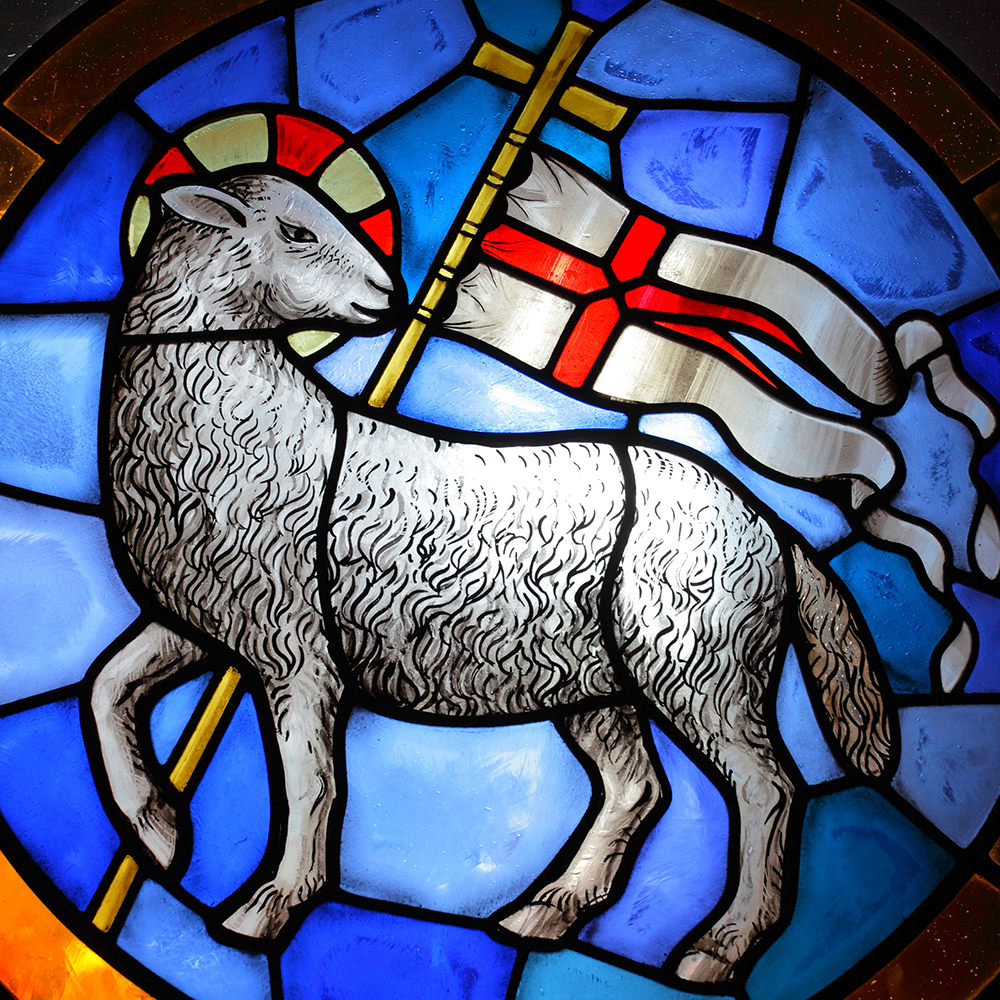
In today’s Gospel we hear the account of Jesus’ baptism as told by the Gospel of John. Unlike the narrative form of the synoptic gospels, the author John recounts the story through John the Baptist’s testimony of who Jesus is, the Son of God. John’s testimony not only reveals Jesus, but also helps us understand how to be true evangelists.
John had a very successful baptism ministry. The Gospels tell us that all of the people regarded him as a prophet. This was so widespread that the Pharisees would not publicly deny him being a prophet out of fear of the people. Yet, in today’s Gospel, John tells us the reason why He baptizes: So that the Lamb of God may be known in all of Israel. And when John sees the Spirit coming down upon Jesus at His baptism, John testifies that Jesus is the Lamb of God who has come into the world. From that moment on, John’s mission declines. He continues to proclaim Jesus and call Israel to repentance, but it won’t be long before he will be killed for doing the will of God.
For many evangelists today, whether they are in charge of large, popular organizations that share the Good News, or are simply parents trying to evangelize their fallen away children, the temptation is to try and control the narrative. We think we know what is best to wake someone from their sinful stupor, and are satisfied when we make plans and they are carried out. But sometimes our well conceived plans get in the way of grace. Consequently, if an evangelist relies too much on themselves, then they begin to only serve their own agenda. And while these agendas may come from a well-meaninged place, they will ultimately fail to achieve their goal if they are done without God.
John avoids this pitfall. He is only concerned with the one goal God has given him: to reveal Jesus to the world. He could have easily missed the descent of the Holy Spirit if he had continued to try to control the narrative and insist that Jesus should not be baptized instead of humbly submitting to Jesus’ request. He could have changed directions with his ministry, and used the fame that he gained to live a comfortable life of retirement after he revealed Jesus to the people on the shores of the Jordan River. But he didn’t. He stayed true to the mission and the message that He had been given, and when it was completed, He continued to bring about God’s kingdom.
So the question we are to ask ourselves in the light of the Gospel today is: Am I doing the will of God in the way God wants me to? Or am I doing what I think is best without consulting God prayerfully. John spent years in the desert, detaching himself from worldly comforts and desires which allowed him to hear God’s voice. Do we do the same? Do we remove ourselves enough from the world that God’s voice becomes loud and clear?
The answers to these questions will be evident in the fruit that is born. For John, hundreds of people repented and then left him to follow Jesus, and he eventually died for the Kingdom of God. For us, the fruit will look similar. People will be attracted to our witness in both word and deed. They will desire to have what we have. They will recognize that we are different….And others will kill us, socially or physically. They will ostracize us because what we stand for calls them to change, and rather than remove their sin, they would prefer to remove us.
So in a world that sees that good evangelization is present with the amount of money that is made, or the popularity that is gained on social media, John teaches us the key to evangelization is detachment and adherence to the mission that God gives us. We must be willing to do the thing that God wants us to do and receive the worldly accolades that He desires to give us. Then we must be willing to give all that up when God asks us to, choosing heavenly glory over worldly fame and comfort. In this, people will realize that our evangelization is not about us. It is about Him. Just as John showed the world it was not about his prophetic, baptizing mission, but about the Son of God who had come to save us from our sins.