
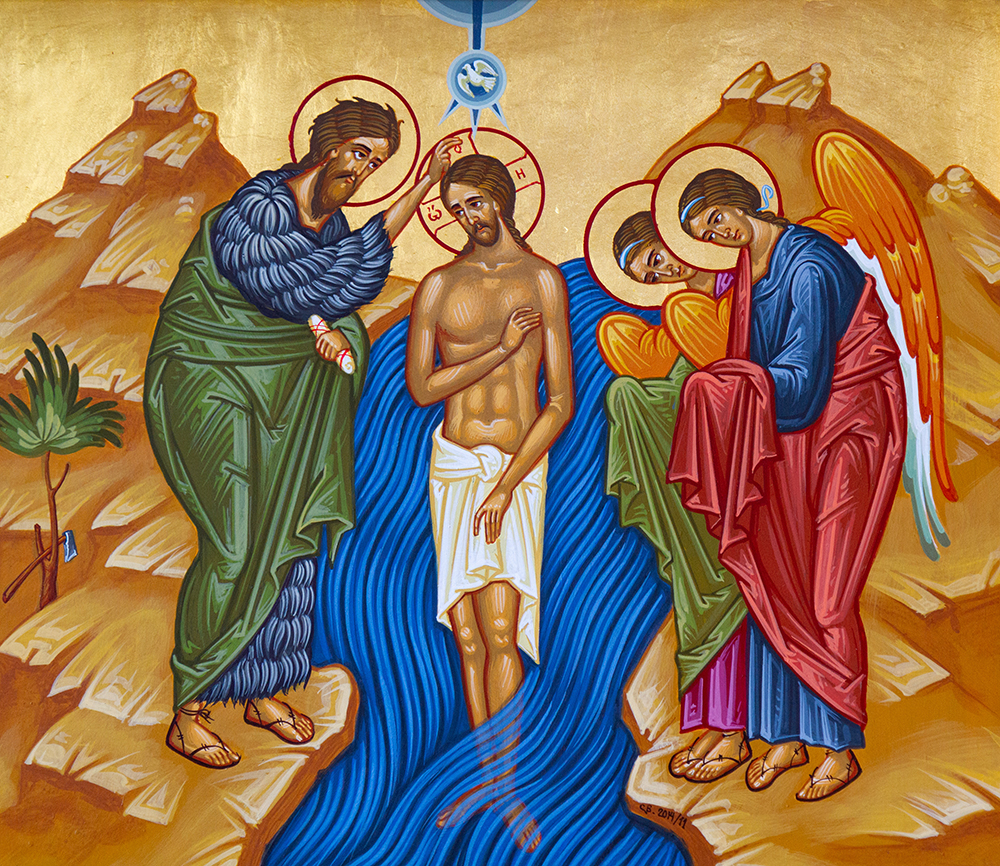
In today’s Gospel, we hear Matthew’s version of Jesus’ baptism. When Jesus approaches His cousin John at the Jordan river to be baptized, John refuses to do it. The Jewish baptism that John administered was a symbolic gesture. It was one that signaled that the person being baptized was turning away from their sinful life and toward following God’s commandments. The ritual itself did not affect any change, just signalled an intent from the penitent.
Jesus did not need to be baptized, and John knew this. Just as John had recognized Jesus’ righteousness when he leapt in his mother’s womb, John now proclaims that there was no need for Jesus to be baptized. And he was right. Jesus had never sinned. He had not turned away from God and His commandments. He did not need to enter the waters. In fact, John recognized that he, the baptizer, should be baptized by Jesus. It would be a scandal if Jesus stood side by side with the sinners on the banks of the Jordan river and was seen as one of them.
But Jesus tells John to allow it. It must be done. Jesus does not give a reason other than to ‘fulfill all righteousness’. Could John have understood this vague phrase? Maybe. But regardless if he did or not, he chose humility. Despite what he did know which was that Jesus did not need to be baptized, he humbly submits to Jesus’ request. What followed changes the world.
When Jesus goes into the waters, it is not Jesus who is changed. Rather, the intention and action of baptism are transformed into an eternal reality and the once merely symbolic waters are made efficacious. Baptism becomes the doorway through which all penitents should walk through on their way to a relationship with God, welcoming all who plunge into the waters into the family of God. This is emphasized with the theophany that occurs when John baptizes Jesus. The heavens are opened, the Holy Spirit rests upon Jesus and the Father proclaims: This is my beloved Son with whom I am well pleased. And this statement becomes true for any one who follows in Jesus footsteps into His baptism.
After Jesus is baptized, He embarks on His mission. He does combat with Satan. He heals the sick, loves the poor, and preaches that the Kingdom of Heaven is at hand. He forms His followers who become the Church, and then He dies on the cross for our sins and rises from the dead because He is the Lord of Life. He accomplishes all of this so that we could enter into His family which is what we were created for, but had taken away from us because of our sin. He does all this out of love for His Father and love for us.
And so Jesus offers His life and love to us. He lays it all out in His word, His sacraments, and the life of the Church. He gives us the ability to be one with Him. And the way that we respond to His invitation is by entering the same waters of baptism as He did. Yet, just like a marriage, the ritual is not the end of baptism. Rather, it is the beginning of a relationship that lasts as long as we have life within our souls. For it is in being baptized and entering into Jesus’ life that we become God’s beloved sons and daughters with whom He is well pleased.