
Imagine that your cousin is wrongfully imprisoned and on the same day you win the lottery. Over the next weeks and months, you go around giving your money away: a million here, a million there. You don’t attempt to post bail or do anything about your cousin’s situation. You just go around being kind to perfect strangers while your own flesh and blood rots in a cell. If your cousin heard about this, he’d probably be quite upset.
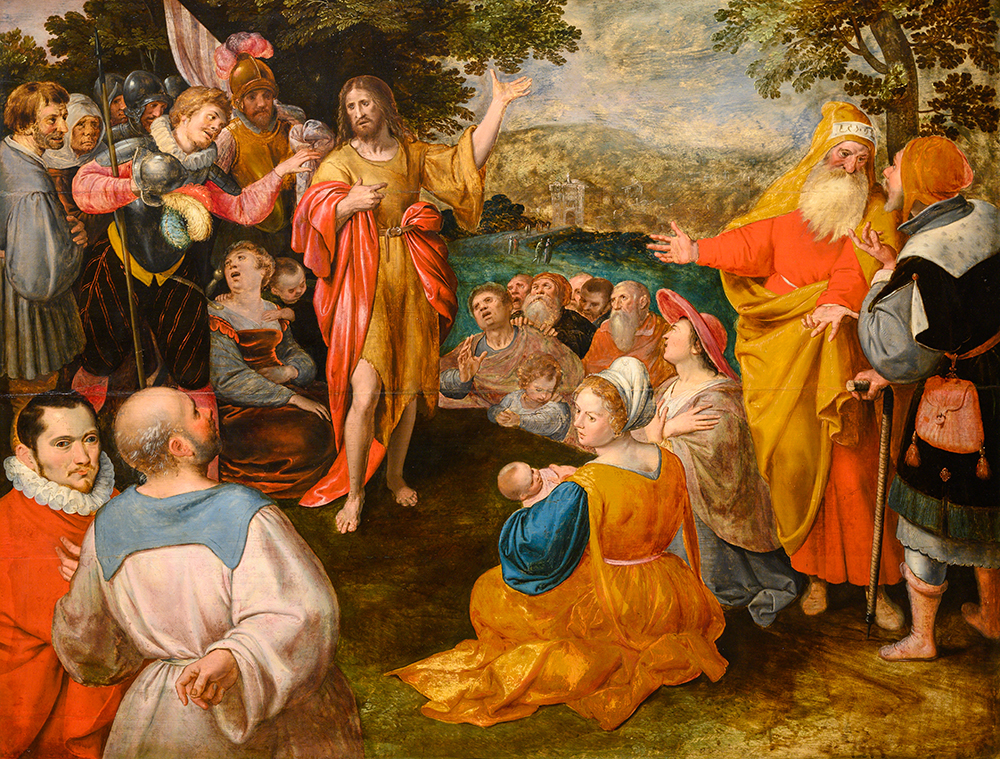
Something similar is happening in our gospel from Matthew chapter eleven. Seven chapters earlier, John the Baptist was wrongfully imprisoned by King Herod. On the very same day Jesus heard about this, He began his public ministry. And what did He begin to do? All the things that He lists in our gospel: helping the blind to see, the lame to walk, the lepers to be cleansed, the deaf to hear, the dead to be raised, and the poor to have the good news preached to them.
During the weeks and months that John was in prison, Jesus was doing these profoundly healing and liberating things. He was showing charity to complete strangers, but apparently not to his own family. John the Baptist was Jesus’ cousin, and yet He apparently had no charity to show him, nothing liberating to do for him. And when John heard about this, he must have been confused or even upset. He thought He knew Jesus, He thought He knew who He was—that He was not only His cousin, but the Messiah: the savior, the liberator. But perhaps he was wrong. Perhaps he should ask Jesus if He really is the Messiah. And so, we hear his question to Jesus in our gospel: “Are you the one who is to come, or should we look for another?”
Don’t we also have this question on our lips at times? Don’t we also wonder at times if Jesus really is who He says He is: the savior, the liberator? When we read the gospel, or look at other people’s lives, it can seem that Jesus is charitable to everyone else except us. He helps everyone else overcome their fear, work through their grief, break free of their addiction, recover from their illness, resolve their doubt, or make peace with their painful past, but not us. He has no charity for us, for we who wait weeks, months, and even years imprisoned in our fears, griefs, addictions, illnesses, doubts, and pains. “Jesus, are you really the one who is to come? Are you really the Messiah—the savior, the liberator? Or should we look for another? Should we look for salvation from someone or something else?
Jesus answers John’s question, and He answers our questions, by quoting our first reading from the Book of the Prophet Isaiah. Isaiah foretold a time of definitive salvation, of final liberation, when God would come and save His people once and for all. This would be a time when all of creation would be renewed, when suffering and death, sorrow and mourning, would be no more, and strength and life, joy and gladness, would be restored. And Jesus tells John, and He tells us, that this time is at hand and is beginning to be fulfilled. But it’s only the beginning. Some of the blind can now see, but not all of them. Some of the deaf can now hear, but not all of them. And this healing is only temporary. Because of death, even those who can now see will be blind again, and those who can now hear will be deaf again. But one day all the blind will see and all the deaf will hear and they will never lose their vision or hearing again.
Jesus did not just come to save and liberate us from our present fears, griefs, addictions, illnesses, doubts, and pains. He came to save and liberate us from all of them—past, present, and future. And He will do so one day. Jesus really is the Messiah—the savior, the liberator—but He’s a much better Messiah than we’d like Him to be. We’d like Him to be a temporary Messiah. We’d like Him to be a kind of “get of jail free card” that we can play in the present moment in order to fix our problems right here and right now. But the hope and joy of the Gospel is that Jesus is a much better Messiah than we’d like Him to be. He’s not a temporary Messiah, but an eternal one. He came not just to fix our present problems but all our problems for all eternity. He came not just to save us from jail on a particular turn, but to save us from jail completely—the eternal jail of sin and death.
This is the hope and joy we celebrate this weekend as we anticipate the coming of the Messiah at Christmas. So, let us rejoice and be glad. Let us be strong, and fear not. Our God is coming. He’s coming to save us, not just now, but for all eternity. Amen.