
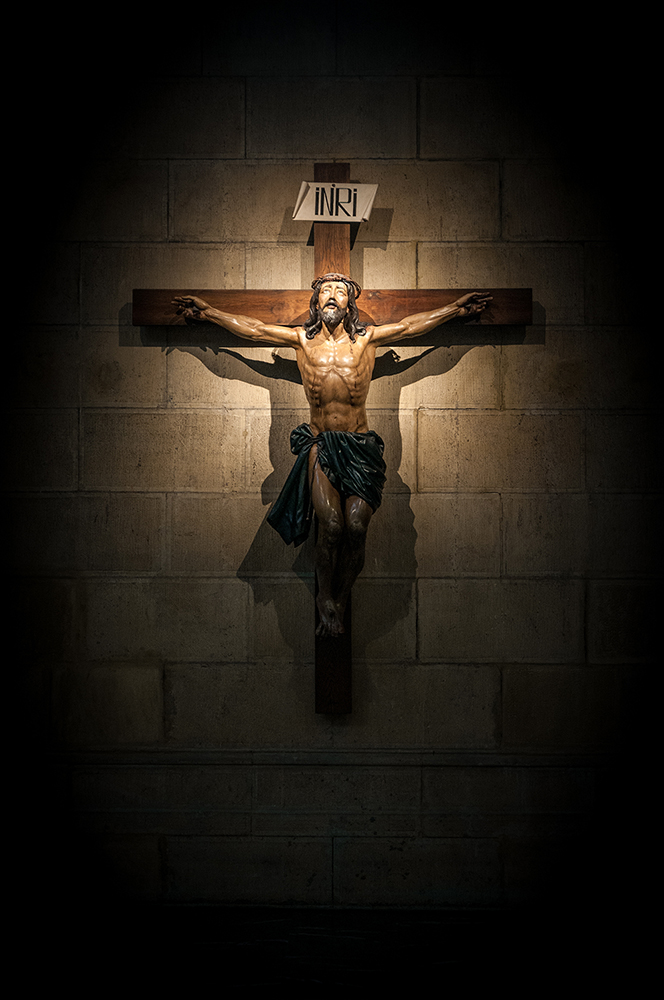
Many of us are familiar with the popular African American spiritual that asks if we were there when they crucified the Lord, a prospect that causes us to tremble. Would you believe that, in fact, you were there at the crucifixion? And that you are there every time you attend Mass?
When Jesus instituted the Eucharist at the Last Supper, He gave His Apostles a strange command: “Do this in remembrance of me” (Luke 22:19). Why did He want to be remembered by the repetition of this meal and not by the repetition of His teachings or standing up for the poor or healing the sick? Why did He say to do this in remembrance of Him?
The answer lies in the context. The Last Supper was a Passover liturgy, a ritual meal that memorialized the night when the Lord saved His People from slavery in Egypt. We read in Exodus 12 about how the Lord commanded them to eat a special meal, involving a sacrificed lamb and unleavened bread, and that they should eat this ritual meal every year as a “memorial day” (Exodus 12:14). But they were not simply remembering the great events of the past. The liturgical celebration allowed each successive generation to relive those events and not simply to remember what the Lord did for their ancestors. The prayers of the liturgy are worded as if the speaker was present in Egypt thousands of years ago for the actual historical event.
This is what liturgical remembrance does. It makes present the events of the past and applies them to our lives in the present. Sofia Cavalletti, who developed the Catechesis of the Good Shepherd along with Gianna Gobbi, described liturgical remembering this way: “We can say that liturgy takes the historical event it is celebrating and pulls it out of the time and place where it happened in order to make it present, offering to every person the possibility of becoming actively involved in it.” Through the liturgy, we actively participate in the events being remembered.
What exactly did Jesus want His Apostles to make present again and again throughout history? It was the Passover liturgy He celebrated, but this liturgy extended beyond the Last Supper. The Passover liturgy called for a cup of wine known as the cup of blessing, and this was the one that Jesus consecrated to become “my blood of the covenant which is poured out for many for the forgiveness of sins” (Matthew 26:28). St. Paul also refers to this chalice as the cup of blessing in 1 Corinthians 10:16. After this, the Passover called for singing the Hallel Hymn, a collection of Psalms, and then it was to conclude and culminate with a final cup of wine, the cup of consummation. But the Gospel of Matthew tells us, “And when they had sung a hymn, they went out to the Mount of Olives” (26:30).
Jesus left the Upper Room without finishing the liturgy. The Passover was still awaiting the final chalice of wine when they left. Instead, Jesus went out to Gethsemane and prayed, “let this chalice pass from me” (Matthew 26:39). Finally, after enduring the Passion and while hanging on the Cross, He was given a drink of vinegar—sour wine. The Gospel of John tells us, “When Jesus had received the vinegar, he said, ‘It is finished’; and he bowed his head and gave up his spirit” (19:30). What was finished at this moment? It was the Passover liturgy that He began two days earlier, and it was finished only when Jesus drank the fourth cup of wine.
In Jesus’ mind, what happened at the Last Supper and what happened on the Cross are the same liturgical event. It is the same event that He told His Apostles to do in remembrance of Him. The liturgical action that remembers these events, the Mass, also makes them present and applies them to our lives today. This is why the Mass is also called the Holy Sacrifice of the Mass, because it re-presents Jesus’ sacrifice in the unbloody form of bread and wine.
And so, were you there when they crucified my Lord? If you have been to Mass, then the answer is yes. And you are present at the crucifixion every time you go to Mass. That thought should cause us all to tremble in awe.