
Catholicism is well-known for the “smells and bells” of our traditions and liturgies, and for good reason. Sensory experiences can prepare our minds and bodies for what’s about to happen. Think of how the mere sauteing of onions and peppers prepares the whole household for the coming delicious meal. Or how dimming the lights signals it’s time to relax and get ready for bed.
While you might not want to start swinging a censor of incense around your living room just yet (unless you have really high ceilings!), you can create a simple prayer space in your home that signals to your mind and body that it’s time for prayer.
A Reserved Spot
Think of a comfortable and quiet place where you can have your prayer time. Some ideas are choosing a particular chair in your living room, getting a floor cushion for an out-of-the-way corner in your house, maybe even adding a simple or more elaborate kneeler to your bedroom. If you pray at work before the day starts, consider parking in a particular area of the parking lot or sitting at a different place at your desk than where you check your email. The goal here is to have a specific place you go every day for your prayer time that you reserve especially for that.
Sensory Reminders
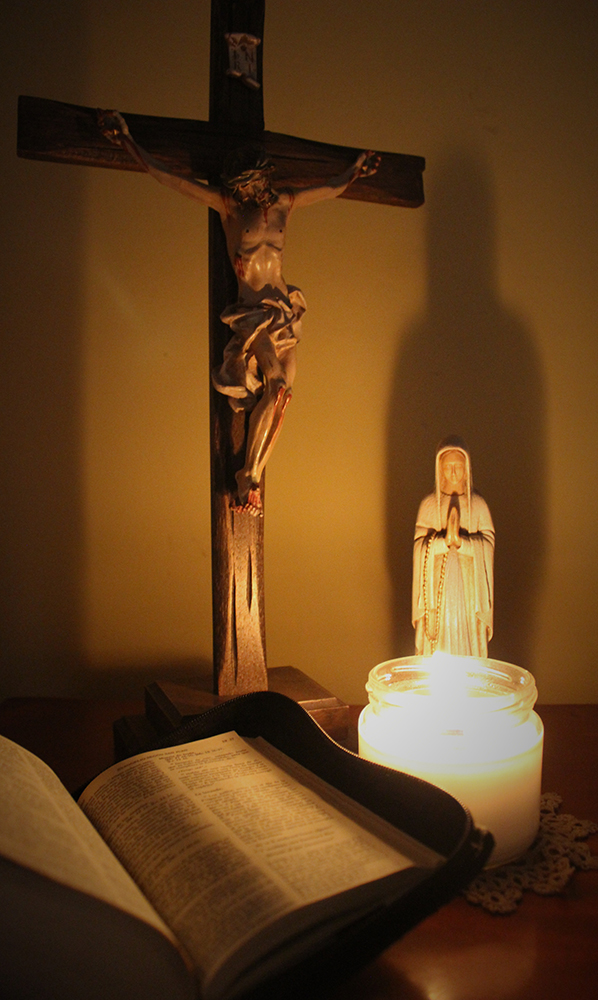
Once you’re in your specified prayer spot, pay attention to what your eyes rest on naturally from this vantage point. Consider adding a crucifix, some religious art, or an inspiring quote to a nearby wall. If your space is used for other purposes throughout the day, keep a favorite image, prayer card, or a small stack of favorite Scripture verses in a nearby drawer (or purse or glove compartment) to pull out during your prayer time for visual inspiration. Light a candle near your prayer spot when it’s time to pray. If you enjoy scented candles, incense, or essential oils, choosing a certain scent for prayer time can further establish your routine. Add in sound by starting your prayer by singing a simple hymn, praying with a contemporary worship song, or reading your selected Scripture passage aloud. These little sensory reminders can inspire your prayer or simply remind you that you’re sitting here for the purpose of spending time with God.
Prayer Resources
Have your Bible and any other current prayer resources at hand. Your prayer space might include a small bookcase to keep spiritual books nearby or a drawer for a journal, rosary, and prayer cards. Having a designated space near your prayer spot helps you remember your prayer plan and not lose time searching for your current book or journal. This same principle can apply on the go. Have a designated bag that you bring to an Adoration Chapel or keep in your trunk with your current prayer resources.
A Familiar Routine
Help your mind and body click into “prayer mode” with a routine for getting started. Try to find a consistent time to pray each day or tie your prayer time to some other well-established part of your routine, such as your arrival home from work or after lunch. When it’s time to pray, use the tips above to create a familiar opening sequence. For example, light a candle, sit in your designated spot, and pull the Bible out of your nearby drawer. Now, the stage is set for your prayer time with Scripture. Or simply make the Sign of the Cross, say “Come, Holy Spirit,” and take four to five deep breaths to quiet yourself for prayer. Develop a simple ritual that helps you open yourself to God for your time of prayer.
While the tips above may seem like small adjustments to make, a predictable environment for prayer can make it easier for your body and mind to settle into your time with God. That very predictability takes some of the work of decision making off the table, so you can concentrate more on connecting with God than on when, where, or what to pray on any given day. Of course, you can pray at any time and anywhere! But these simple tips for creating a prayer space can help you build a reliable default prayer routine you can come back to day after day.